Swinging Back in Time with Hand Me Down the Silver Trumpet
Read Time:2 Minute, 50 Second
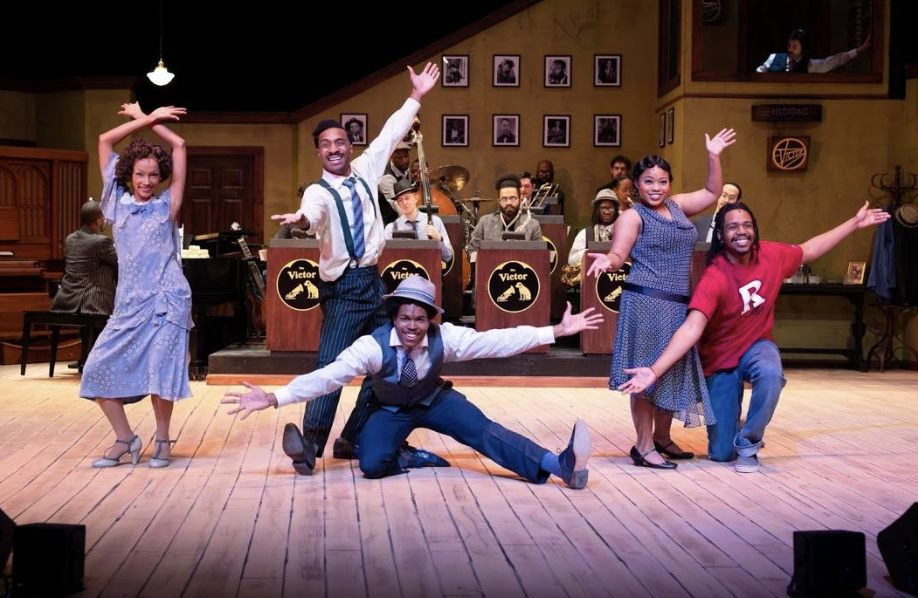
In celebration of black history month, a Rutgers–Camden original show showcases African American culture and highlights music from the 1920s and 1930s at the Walter K. Gordon Theater.
Hand Me Down the Silver Trumpet was created by Rutgers–Camden Professor of Theater Kenneth Elliott, with musical supervision by Daniel Spearman. Spearman is a musician and musical educator from Camden. During the two-week run of the show Professor Elliott and Daniel Spearman shared insights into the initial creation of the show, as well as the past and current social impacts of the music of that era.
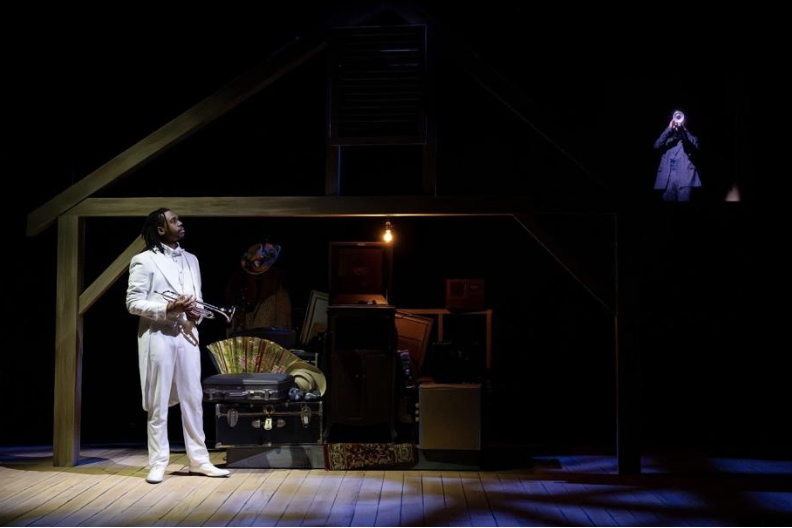
The musical follows the story of a Rutgers-Camden sophomore who finds old records and a Victrola record player while going through his grandmother’s belongings. As he begins to play these records, the audience is transported back to the Camden recording studio of the Victor Talking Machine Company in the 1930s. While the characters featured in the 1930s are fictional, they perform songs of that time that were originally recorded in Camden.
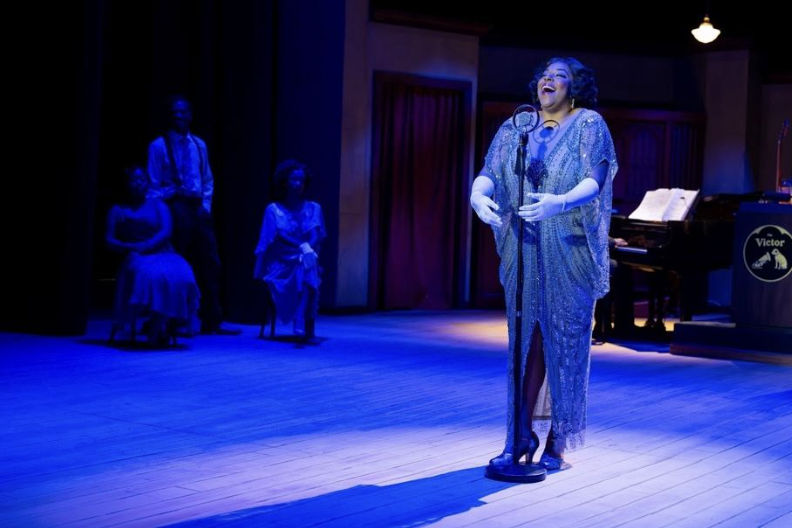
While the musical ran from February 6th through February 15th, it was originally created and performed in 2014. Professor Elliott references “The Sounds of Camden,” a 2014 exhibition at the Stedman Gallery, as the catalyst for the creation of the show. The exhibition showcased memorabilia from the Victor Talking Machine Company, originally founded in Camden in 1902. Professor Elliott also credits August Wilson and Wilson’s play Ma Rainey’s Black Bottom for inspiring the show.
Daniel Spearman supervised the band, organized the music, and trained the singers for the show. When discussing the importance of the story, Spearman refers to the connection between music from the past to the present. He describes the music of this era as providing a “foundation” for American music: “As you dig deeper, you see the bridges that are very apparent”. Spearman notes that hearing the music and seeing it can create a “straight line” connecting the past to the current era.
When discussing the connection and evolution of dance, Professor Elliott also points out that Samuel Reyes, the choreographer, emphasizes the similarities of then to now through the choreography of the show. While Reyes has a strong background in hip-hop, Professor Elliott notes that, “…it’s quite different, what they did, but you can see the influence,” regarding the dance style.
Because of the difference in the sound and style, Professor Elliott points out how the show is often mistaken or misinterpreted; some may view it as “whiny” or “sad.” However, he states, “No, it’s about the experience the people were going through. Some of it, yes, is light-hearted, but not all of it.”
The show addresses this directly with a lot of the songs in the show using analogy as a social reflection. Spearman adds, “…all artistic expression, it’s an opportunity to essentially synthesize the lived experiences…” for people in that time period. Both offer a different view for further exploration into the music that many may not be familiar with.
While the final show was Sunday, February 15th, Professor Elliott notes his love for the arts and why he chooses this medium: “It’s not like a lecture. In fact, that’s the last thing I want to do is really lecture an audience. I want to show them through the music and through the movement and through the story.”

Happy
0 %

Sad
0 %

Excited
100 %

Sleepy
0 %

Angry
0 %

Surprise
0 %
 0
0
 0
0